 SANTOKU
 SANTOKU
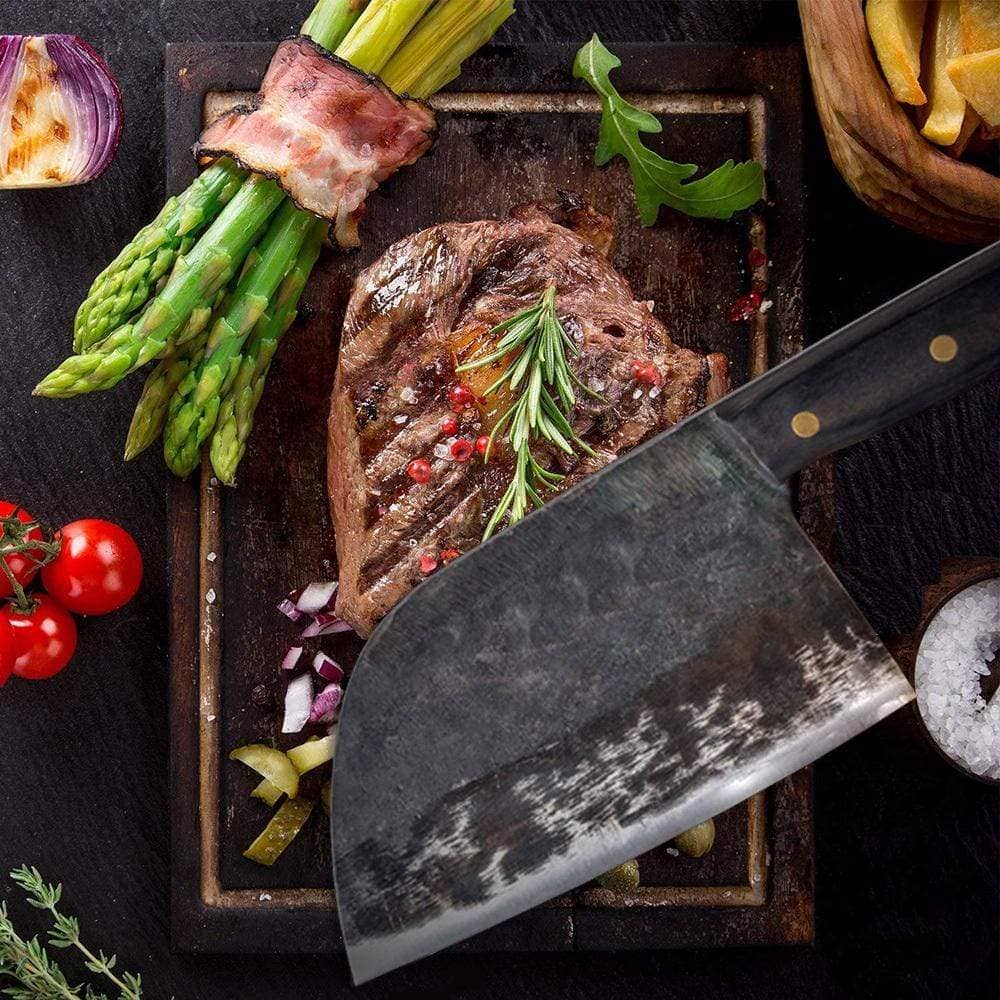
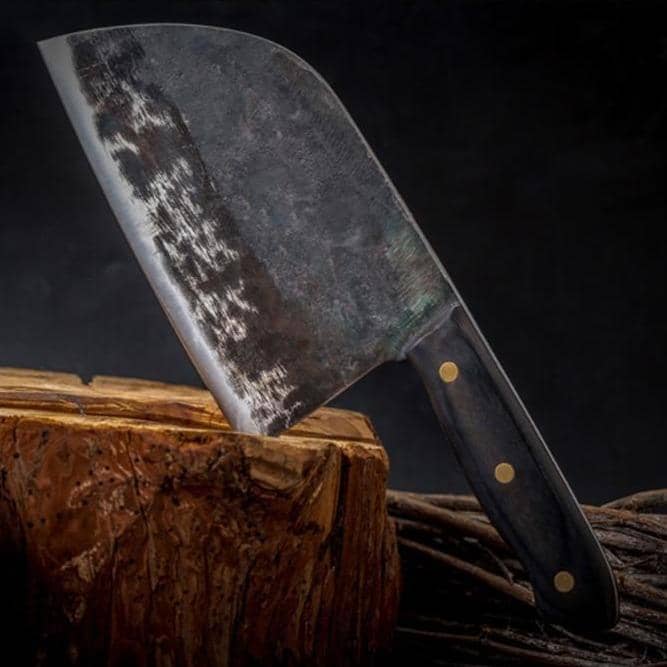
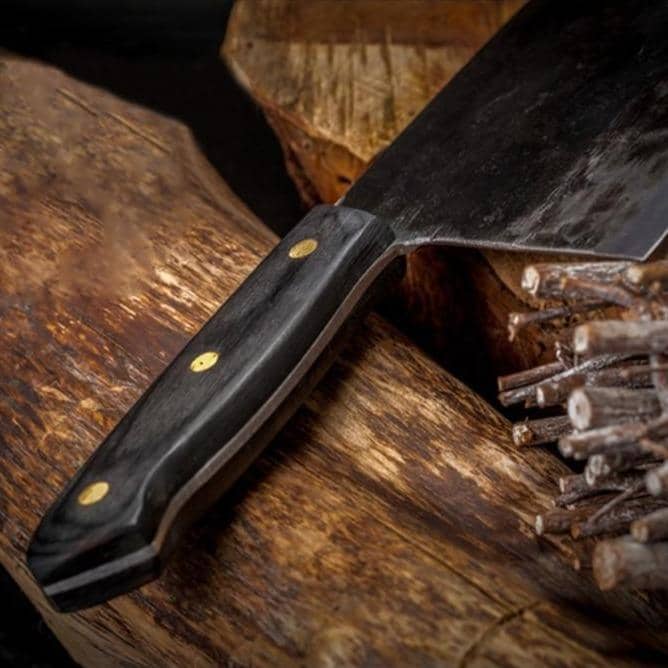
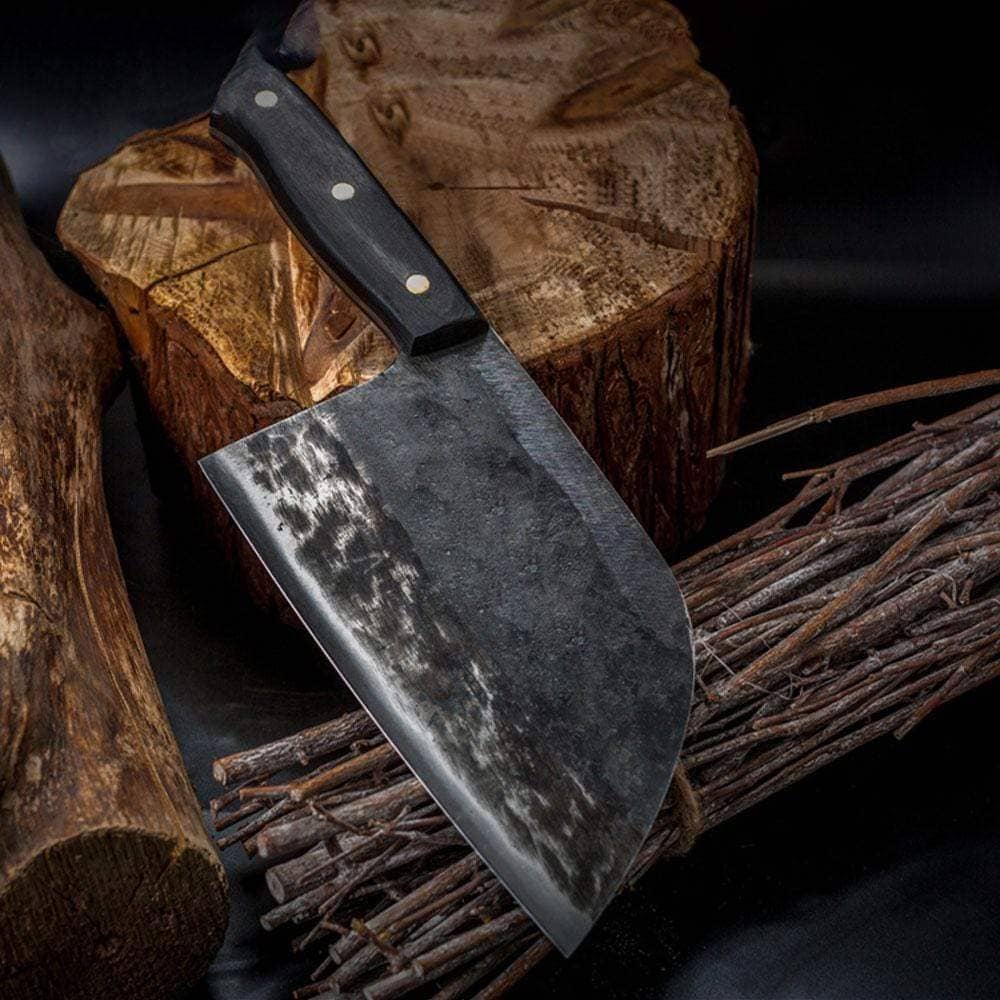
Nakiri / Chukabocho Full Tang Steel Cleaver


Frequently Bought Together


Total Price: €157,90
Couldn't load pickup availability
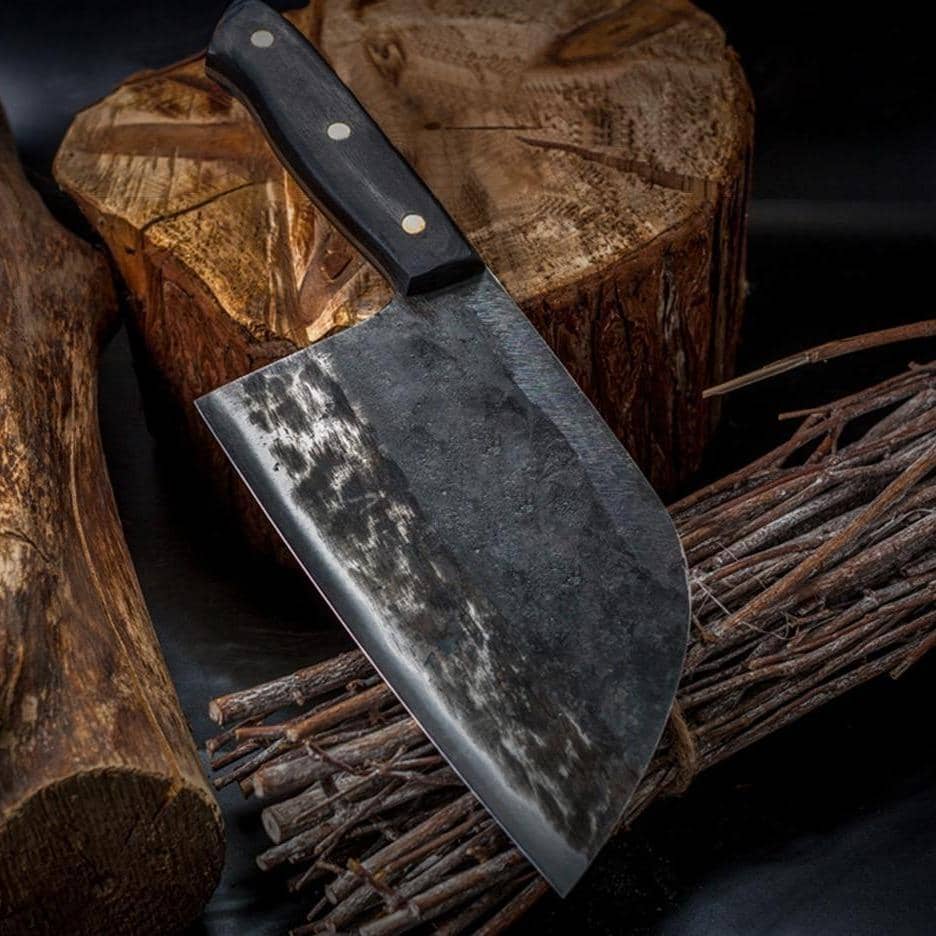
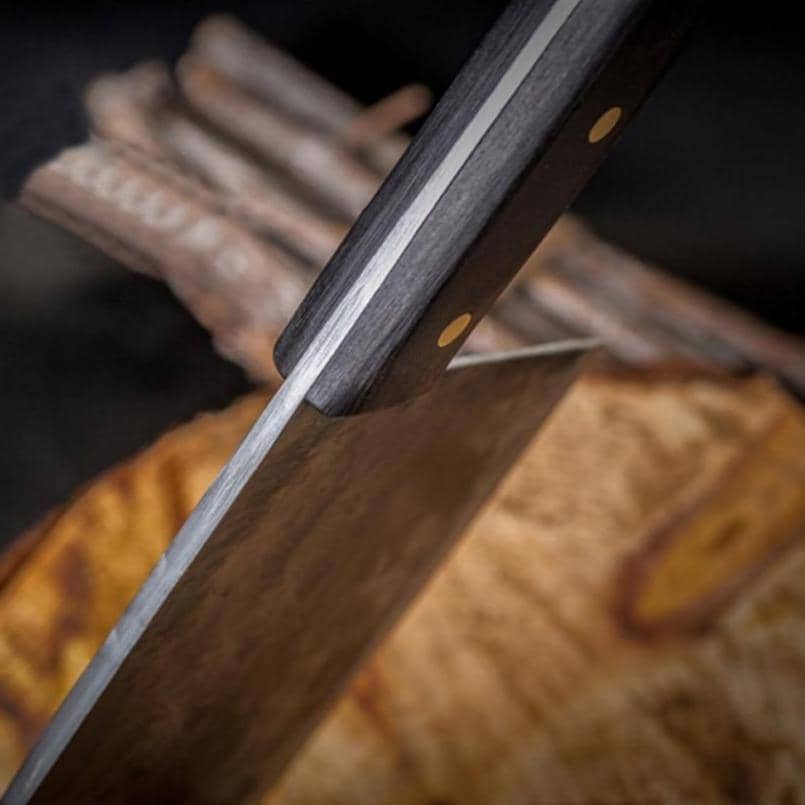
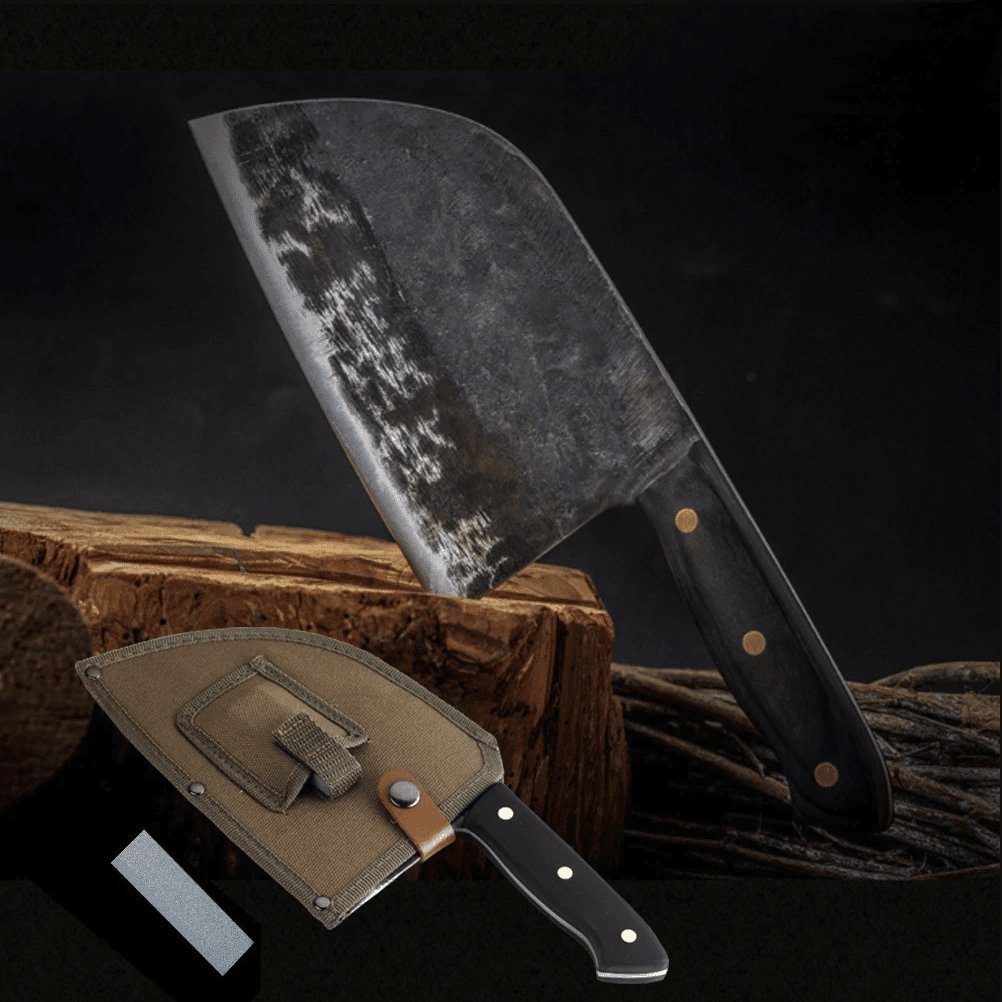
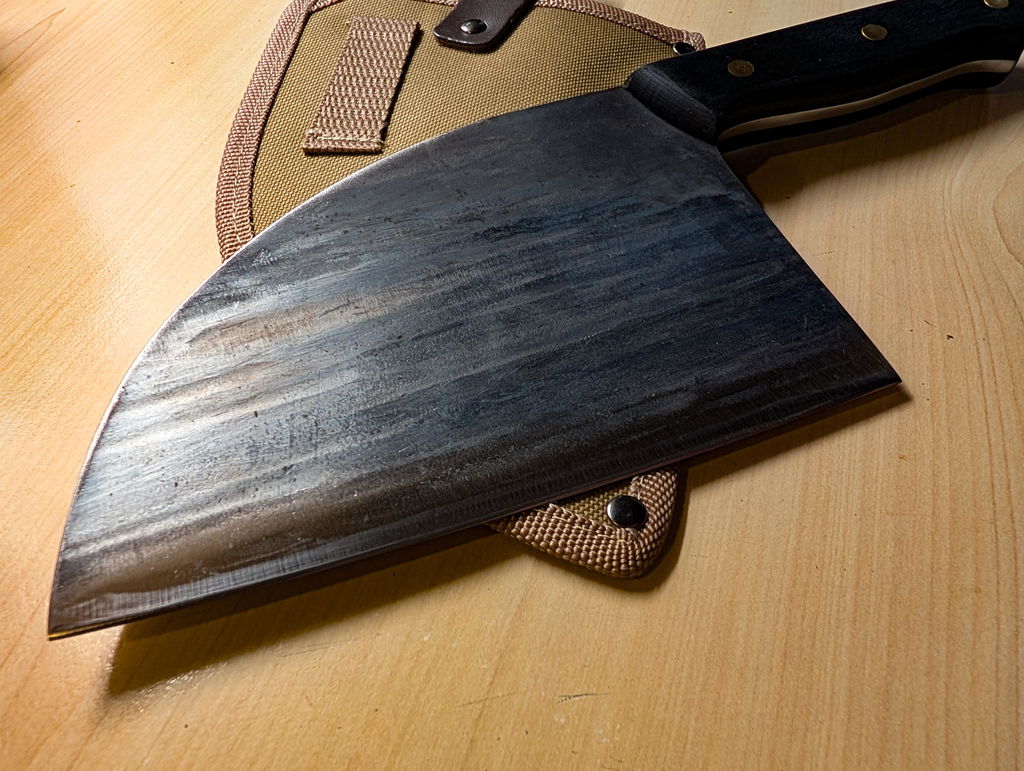
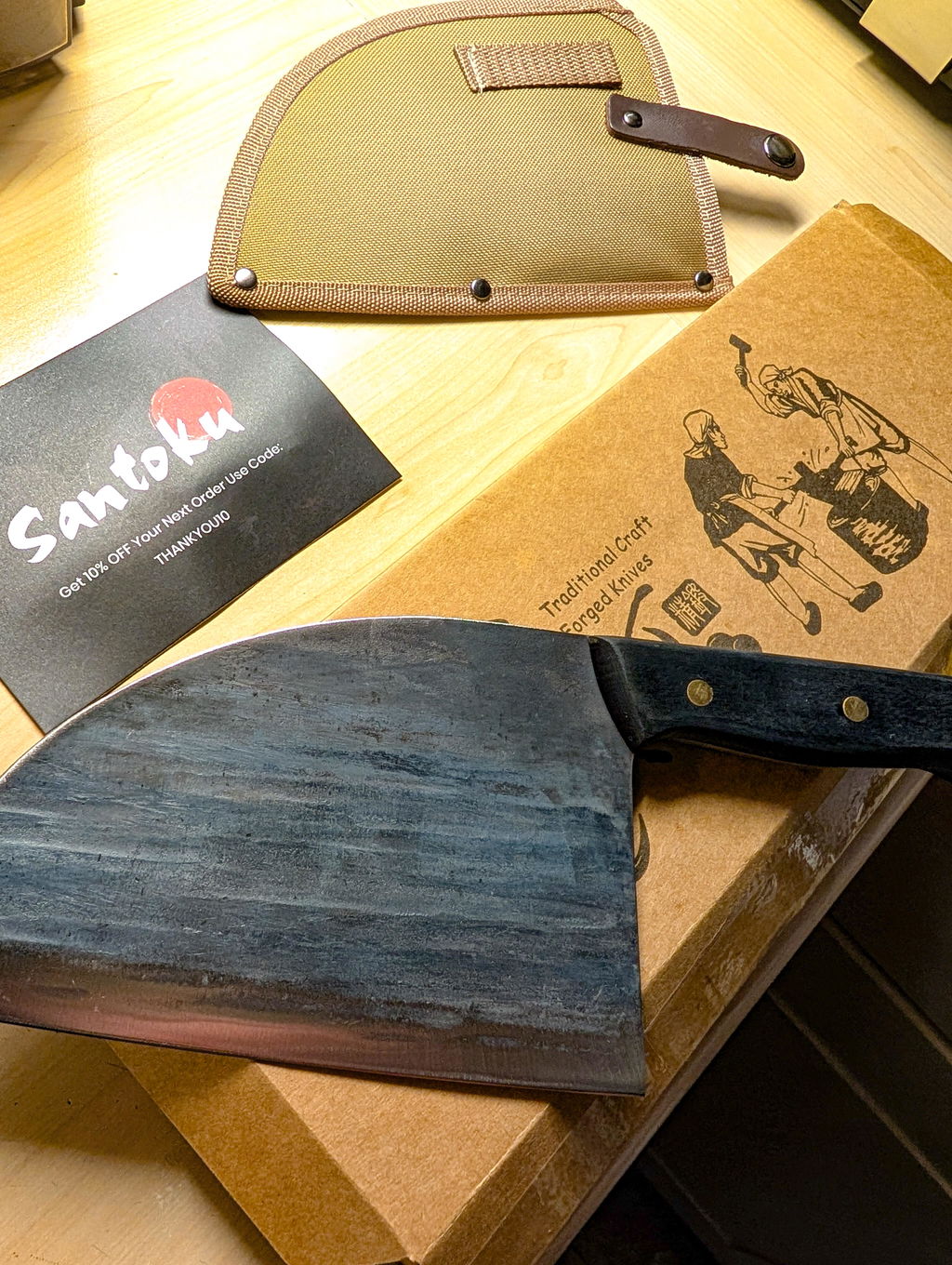
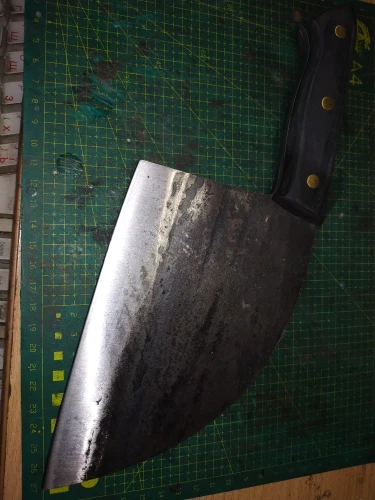
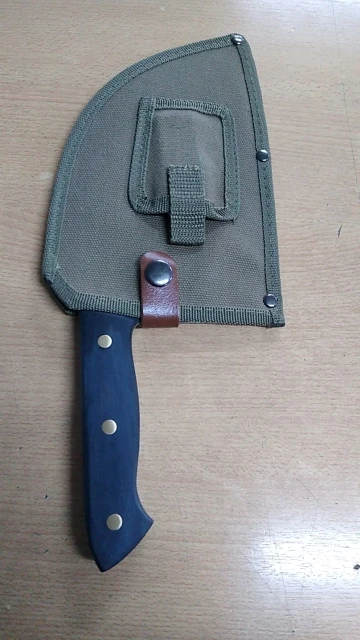
The Nakiri / Chukabocho is a hand-forged Japanese-style vegetable cleaver with an 18 cm straight, double-bevelled high-carbon steel blade — built for clean, full-contact push cuts through vegetables. At 435 g with a 10 cm tall blade and a 4 mm spine, it sits between a lightweight nakiri and a heavier Chinese-style chukabocho: enough height to keep your knuckles clear and enough mass to power through hard-skinned produce. It ships with a safety sheath and is priced at £69.99.
At a glance
- Best for: julienne, brunoise and allumette cuts; hard-skinned produce (squash, swede); precise vegetable prep
- Blade: straight, double-edged (double-bevel) high-carbon steel
- Not for: bones or frozen food — the thin, hard edge is built for clean produce cuts, not impact
- In the box: knife + safety sheath
Specifications
| Overall length | 33 cm |
|---|---|
| Blade length | 18 cm |
| Blade height (widest point) | 10 cm |
| Spine thickness | 4 mm |
| Net weight | 435 g |
| Blade material | High-carbon steel |
| Edge | Double-bevel, straight |
| Expected service life | 15–20 years with proper care |
Why the straight edge matters
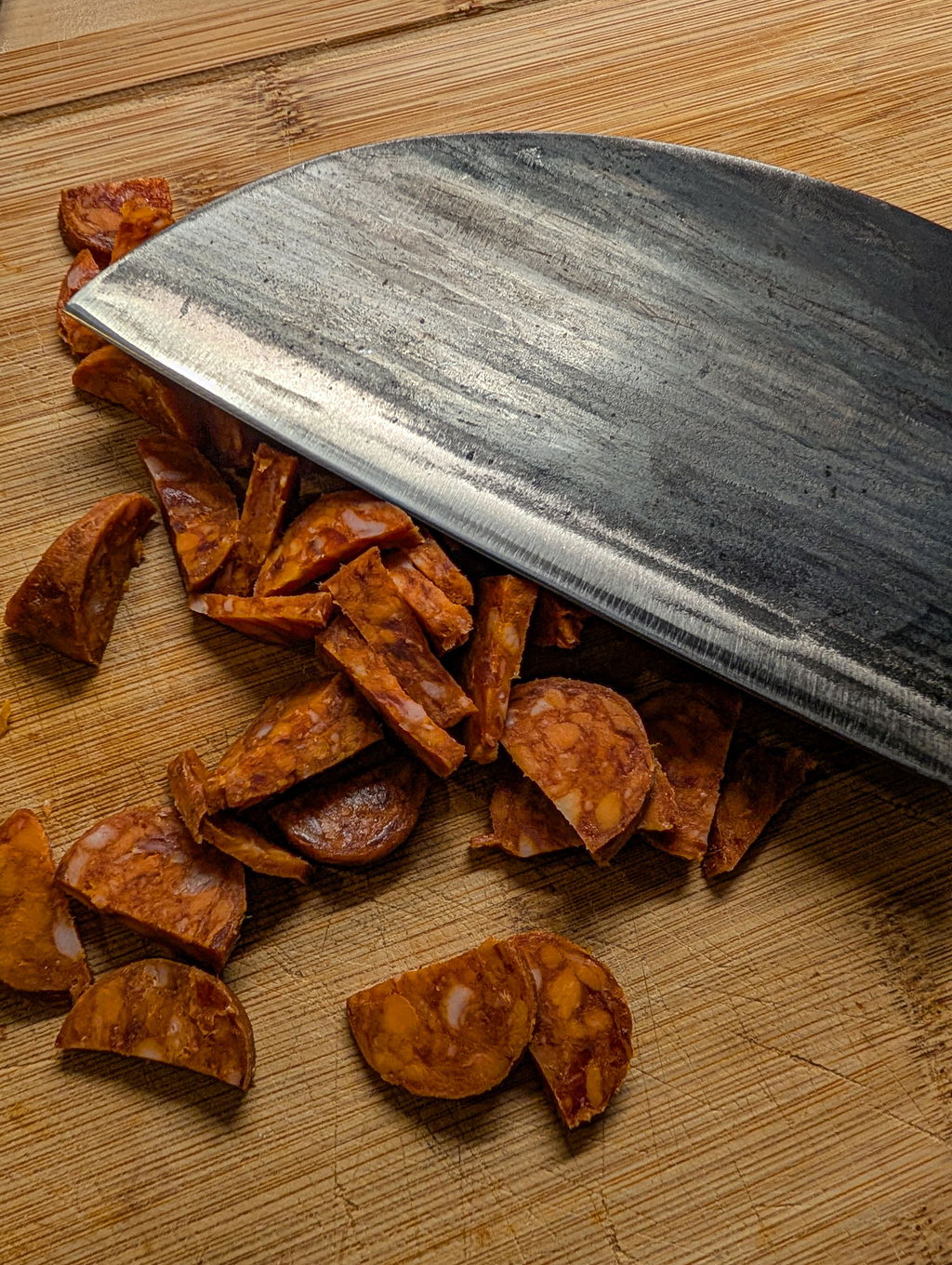
Unlike a curved chef's knife, a nakiri-style blade meets the board along its whole length in a single downward push — no rocking, no sawing. That delivers cleaner, more uniform slices and faster vegetable prep (Nakiri bōchō, Wikipedia). The 10 cm blade height gives generous knuckle clearance and doubles as a bench scraper for moving prepped veg.
Forged for edge retention
Each blade is hand-forged and heat-treated: quenched at 780 °C, then tempered at 180–200 °C. High-carbon steels of this class are typically hardened to roughly 58–62 HRC, the range that balances long edge retention with easy resharpening (ChefPanko, HRC & Steel Types). The result is a knife that takes a very fine edge and, with care, lasts 15–20 years.
Care
- Hand-wash only; dry thoroughly to prevent the high-carbon steel from staining or rusting
- Hone regularly; resharpen on a whetstone as needed
- Do not cut bones or frozen food
FAQ
What is a nakiri knife used for?
A nakiri is a Japanese vegetable knife. Its straight, double-bevelled edge makes clean push-cuts through vegetables — ideal for julienne, brunoise and thin, uniform slices — without the rocking motion a curved chef's knife needs.
What's the difference between a nakiri and a chukabocho?
A traditional nakiri is light (around 150–200 g) and compact; a chukabocho is a taller, heavier Chinese-style cleaver. This blade is a hybrid — 435 g with a 10 cm tall face — giving more heft and knuckle clearance than a standard nakiri while keeping the straight vegetable-cutting edge.
Can a nakiri cut meat or bones?
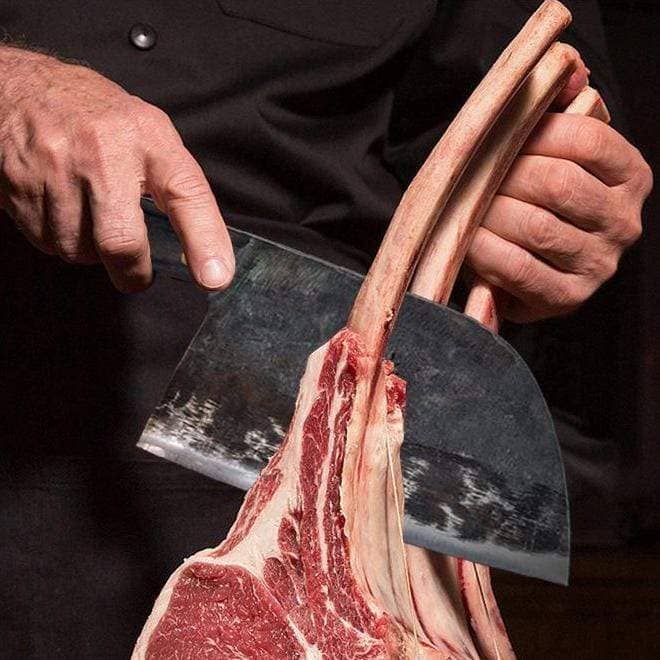
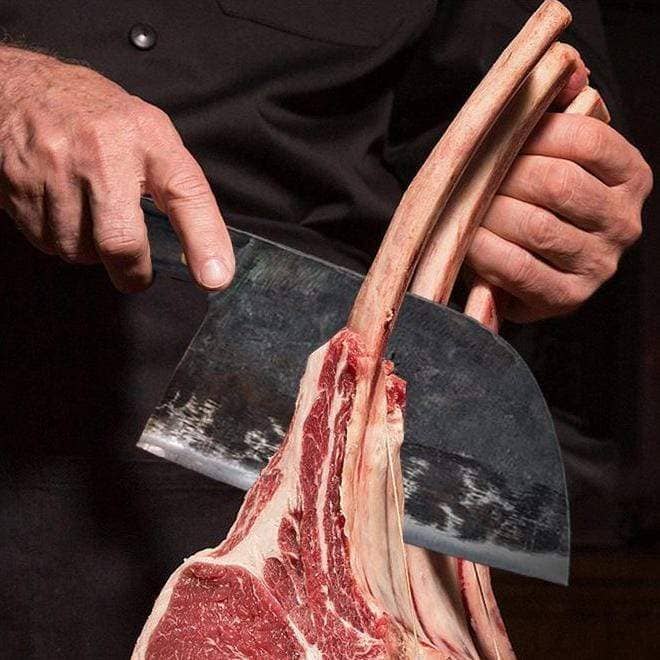
It handles boneless meat, but it is not a butcher's tool. Do not use it on bones or frozen food — the thin, hard high-carbon edge is designed for clean produce cuts and can chip on impact.
How do I care for a high-carbon steel knife?
Hand-wash and dry it immediately after use. High-carbon steel rusts and stains more readily than stainless, so never leave it wet or in a dishwasher.
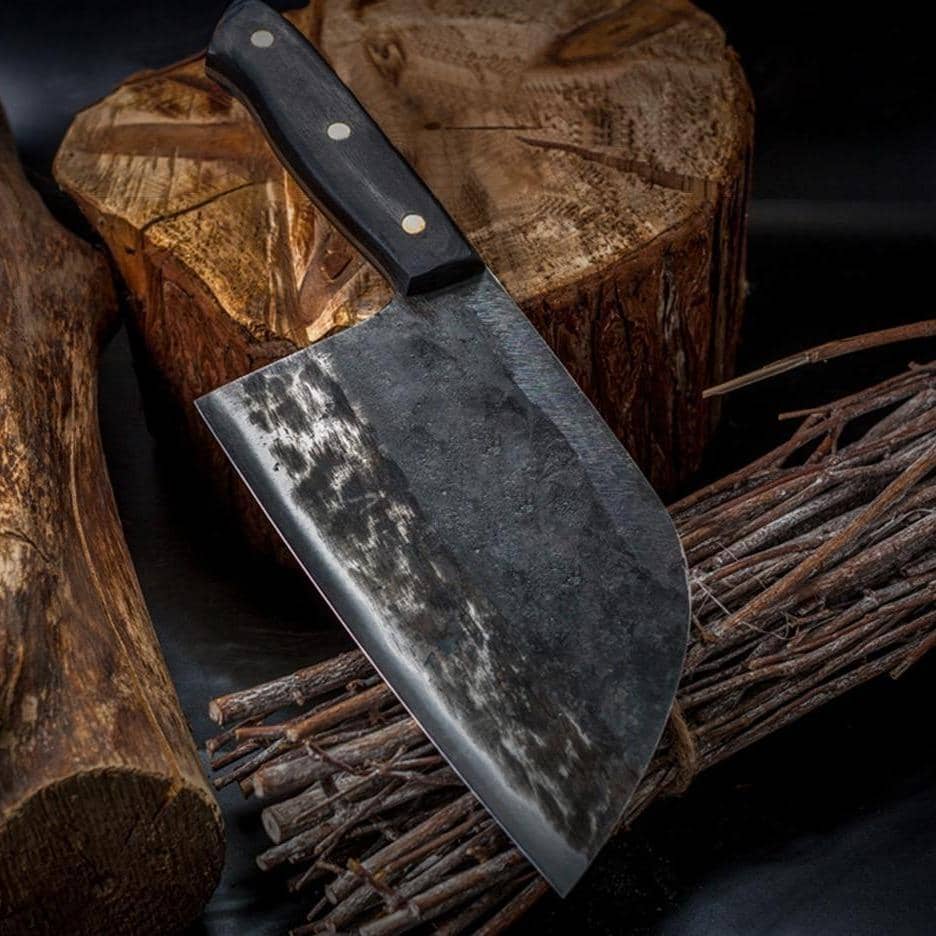
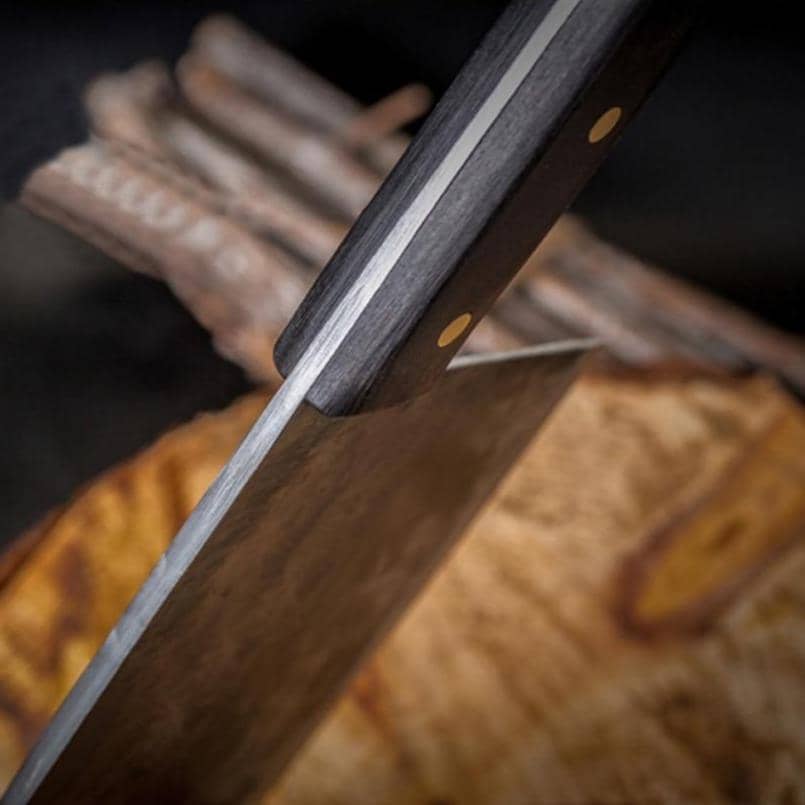
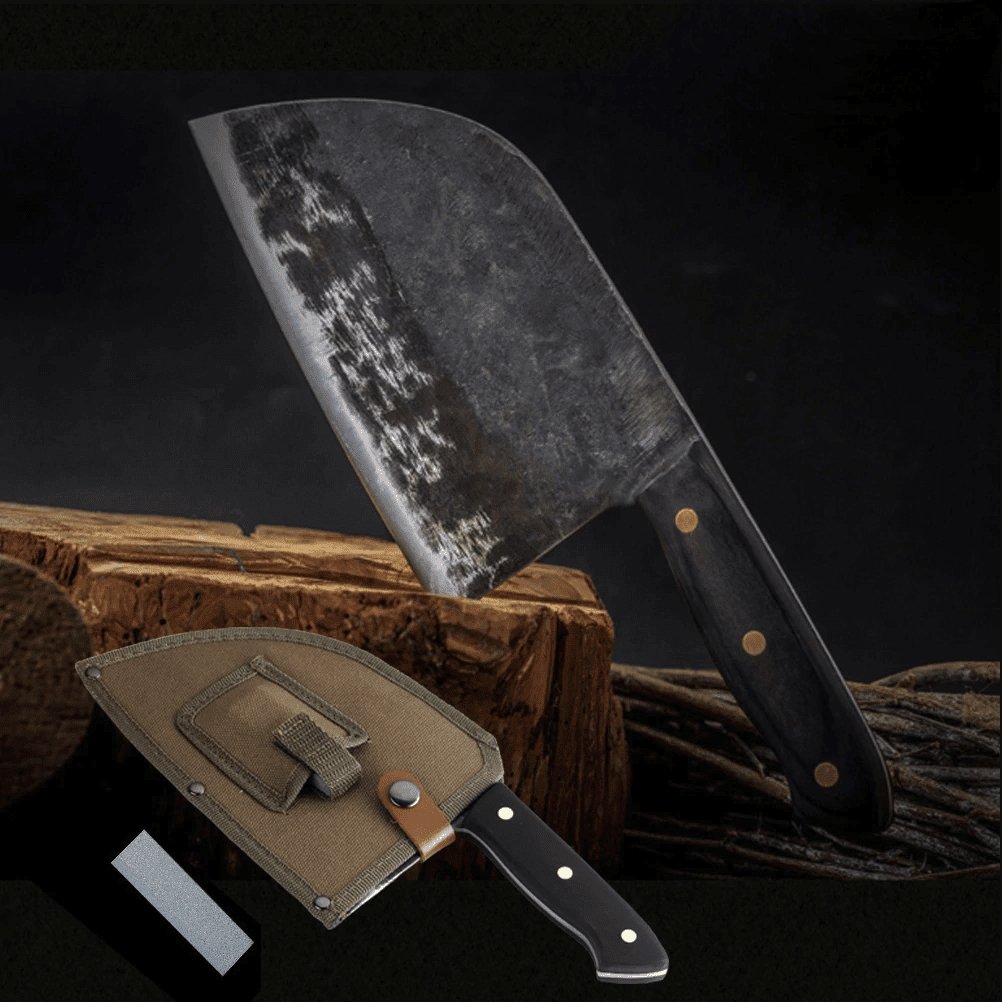
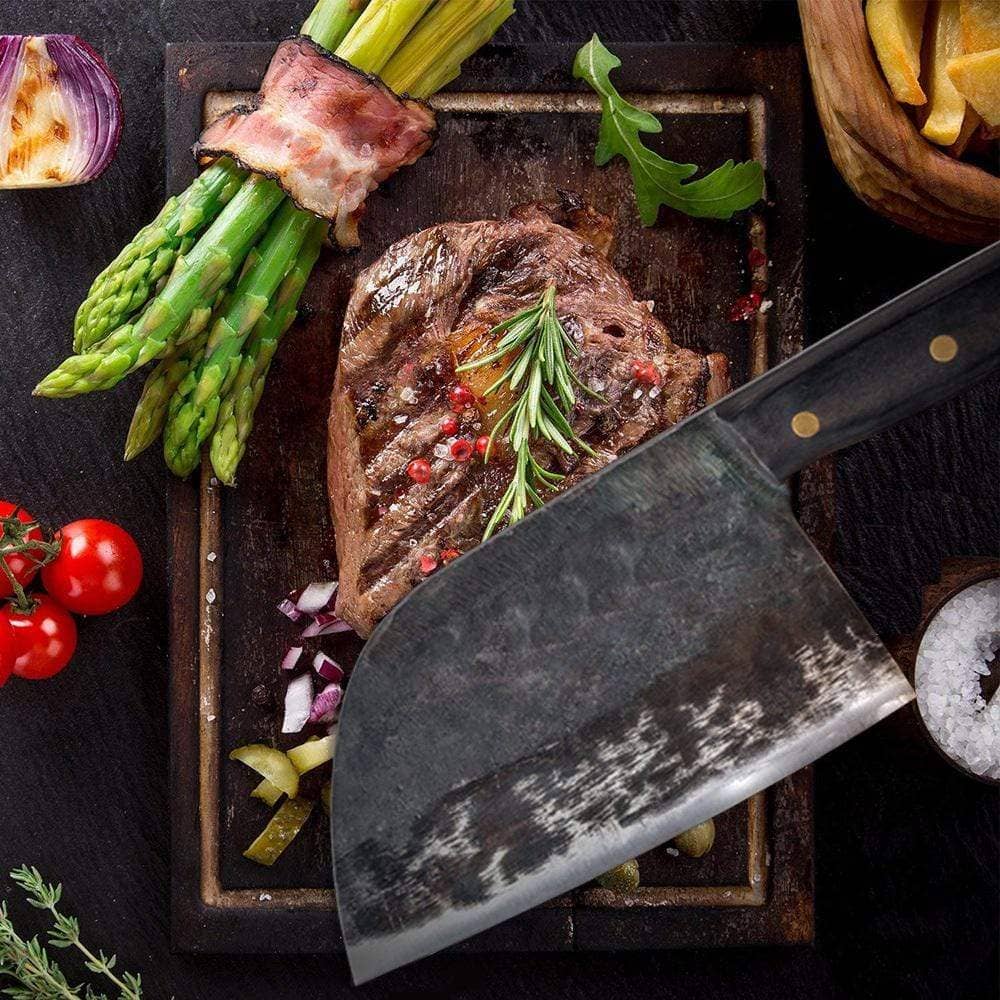
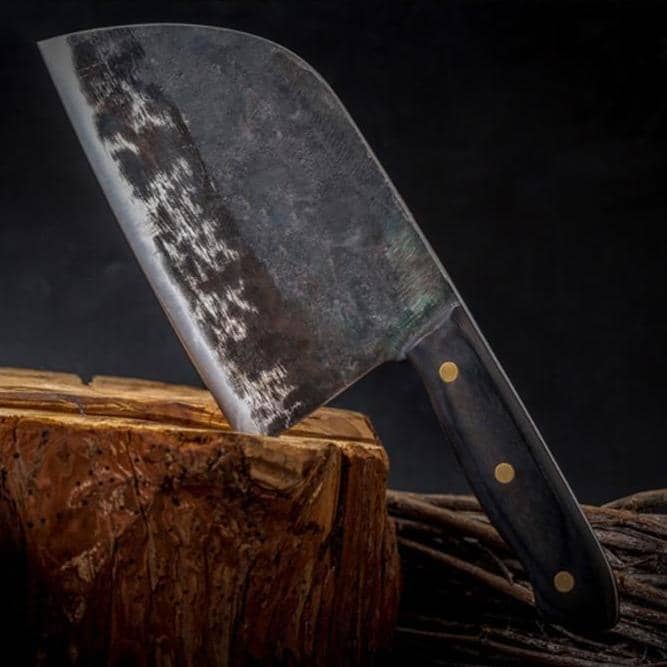
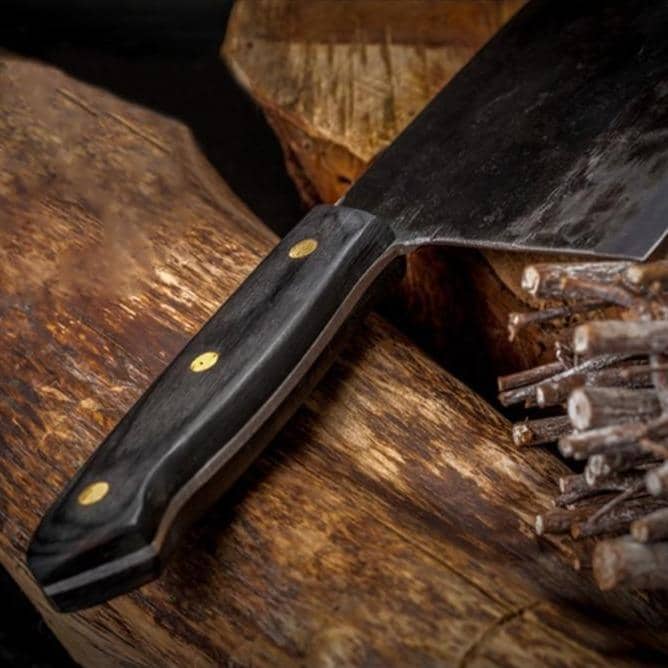
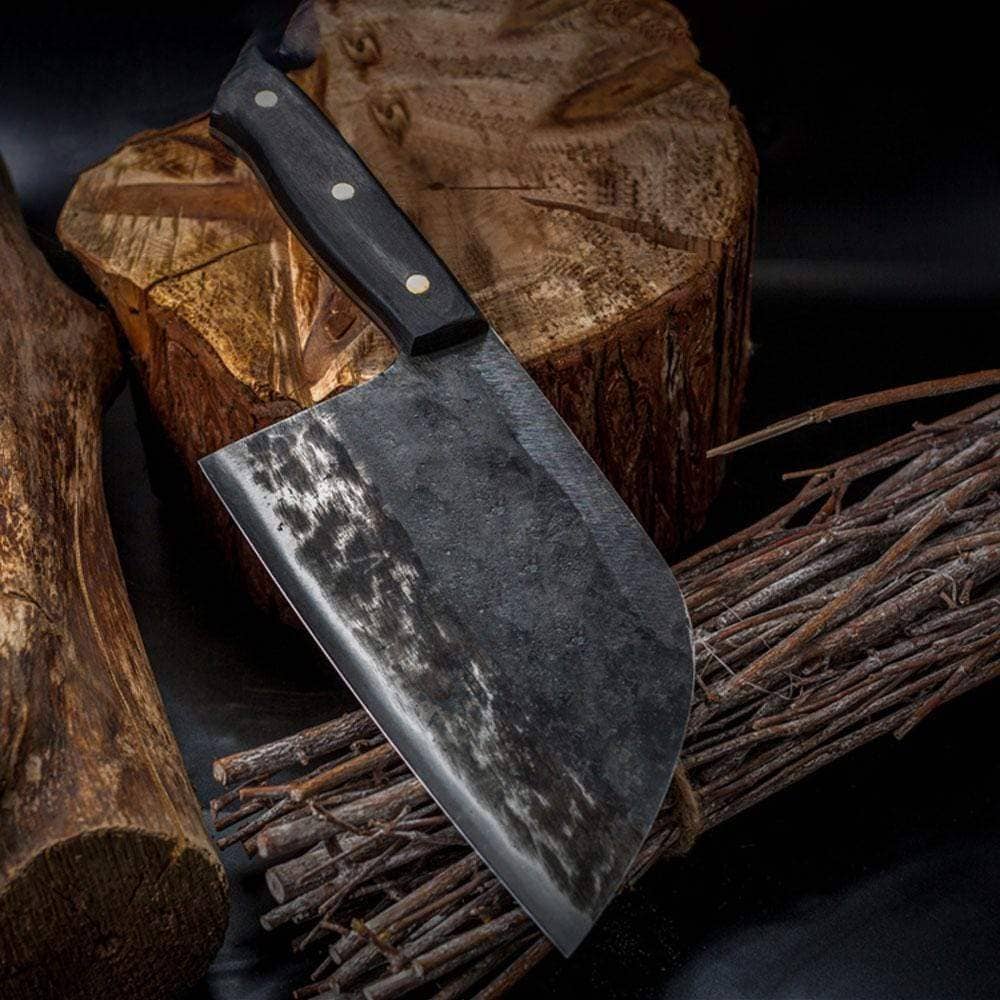
The Nakiri / Chukabocho is a hand-forged Japanese-style vegetable cleaver with an 18 cm straight, double-bevelled high-carbon steel blade — built for clean, full-contact push cuts through vegetables. At 435 g with a 10 cm tall blade and a 4 mm spine, it sits between a lightweight nakiri and a heavier Chinese-style chukabocho: enough height to keep your knuckles clear and enough mass to power through hard-skinned produce. It ships with a safety sheath and is priced at £69.99.
At a glance
- Best for: julienne, brunoise and allumette cuts; hard-skinned produce (squash, swede); precise vegetable prep
- Blade: straight, double-edged (double-bevel) high-carbon steel
- Not for: bones or frozen food — the thin, hard edge is built for clean produce cuts, not impact
- In the box: knife + safety sheath
Specifications
| Overall length | 33 cm |
|---|---|
| Blade length | 18 cm |
| Blade height (widest point) | 10 cm |
| Spine thickness | 4 mm |
| Net weight | 435 g |
| Blade material | High-carbon steel |
| Edge | Double-bevel, straight |
| Expected service life | 15–20 years with proper care |
Why the straight edge matters
Unlike a curved chef's knife, a nakiri-style blade meets the board along its whole length in a single downward push — no rocking, no sawing. That delivers cleaner, more uniform slices and faster vegetable prep (Nakiri bōchō, Wikipedia). The 10 cm blade height gives generous knuckle clearance and doubles as a bench scraper for moving prepped veg.
Forged for edge retention
Each blade is hand-forged and heat-treated: quenched at 780 °C, then tempered at 180–200 °C. High-carbon steels of this class are typically hardened to roughly 58–62 HRC, the range that balances long edge retention with easy resharpening (ChefPanko, HRC & Steel Types). The result is a knife that takes a very fine edge and, with care, lasts 15–20 years.
Care
- Hand-wash only; dry thoroughly to prevent the high-carbon steel from staining or rusting
- Hone regularly; resharpen on a whetstone as needed
- Do not cut bones or frozen food
FAQ
What is a nakiri knife used for?
A nakiri is a Japanese vegetable knife. Its straight, double-bevelled edge makes clean push-cuts through vegetables — ideal for julienne, brunoise and thin, uniform slices — without the rocking motion a curved chef's knife needs.
What's the difference between a nakiri and a chukabocho?
A traditional nakiri is light (around 150–200 g) and compact; a chukabocho is a taller, heavier Chinese-style cleaver. This blade is a hybrid — 435 g with a 10 cm tall face — giving more heft and knuckle clearance than a standard nakiri while keeping the straight vegetable-cutting edge.
Can a nakiri cut meat or bones?
It handles boneless meat, but it is not a butcher's tool. Do not use it on bones or frozen food — the thin, hard high-carbon edge is designed for clean produce cuts and can chip on impact.
How do I care for a high-carbon steel knife?
Hand-wash and dry it immediately after use. High-carbon steel rusts and stains more readily than stainless, so never leave it wet or in a dishwasher.
Standard Delivery (7-10 business days*)
- Free Shipping on all orders
-
Please note, standard delivery may take longer for remote locations. - Gift cards are sent via standard delivery.
The Pros love our knives too

Francesco Arena
Regina Elena 57
Rimini, Italy

Ross Gregor
Masterchef UK,
Edinburgh, Scotland

Julian George Howells
Merchant Navy C.O.C,
Worldwide

Edisson Restreo Hernandez
Las Chilmoleras
Oaxaca, Mexico

Alessandro Fiacco
Singer Palace
Rome, Italy

Gaetano Farucci
Head Chef Caractère
London, England

Giuseppe Biuso
Executive Chef at Il Cappero (Michelin-starred)
Sicilia, Italy





Why our knives
Hand-forged to last a lifetime
Sustainably sourced Japanese steel, paired with a lifetime warranty.
100% secure checkout
Encrypted payments via Shopify, Apple Pay, Shop Pay and Klarna.
Free worldwide shipping
Fast delivery, easy 180-day returns - no questions asked.
Need help choosing?
Our team is online and ready to recommend the right product for you.
Chat with us →


